Wondering why the Near West End can feel so different from one block to the next? That is part of what makes this part of Richmond so interesting. If you are buying, selling, or just getting to know the area, understanding the homescape can help you make better sense of what you are seeing. Let’s dive in.
Why the Near West End Feels So Varied
Richmond’s Near West End is not one single, uniform district. It is better understood as a layered residential area connected to places like Byrd Park, West of the Boulevard, Monument Avenue, Carillon, Westhampton, and Windsor Farms.
That mix shapes the look and feel of the housing. City and preservation sources describe pre-war homes under mature tree canopies, sidewalk-lined streets tied to small commercial areas, and also early suburban sections with larger homes and deeper setbacks. In practical terms, you can see urban, suburban, and historic patterns all within a relatively short drive.
How Development Shaped the Architecture
A lot of the Near West End’s character comes from when different sections were built. West of the Boulevard grew largely as a middle-class streetcar suburb from about 1895 to 1943, with straight tree-shaded streets, attached two-story brick town houses, front porches, and a consistent scale.
Monument Avenue encouraged westward development with a more formal boulevard layout. Its homes vary in style, but the streetscape stays cohesive because of shared materials, rooflines, orientation, and setbacks.
Carillon and Westhampton add still more variety. Carillon includes late-19th-century through mid-20th-century homes, while Westhampton and Three Chopt Road bring in a more suburban pattern with wooded lots, longer driveways, and architect-designed houses.
Colonial Revival Stands Out
If you drive through the Near West End and try to name the most recognizable style, Colonial Revival is usually the easiest place to start. It acts as an anchor style across several sections of the area.
These homes often show a balanced, symmetrical front, a centered entry, columns at a porch or portico, and evenly placed windows. Some are one story, but many are two-story brick homes that feel formal and grounded.
In Windsor Farms, Colonial Revival and Georgian Revival became especially prominent. Along Monument Avenue, Colonial Revival also helped shape houses that feel broader and more horizontal from the street.
For buyers, this style often reads as classic and timeless. For sellers, it helps explain why so many Near West End homes have strong curb appeal without needing flashy details.
Cottages and Bungalows Add Warmth
Not every Near West End home feels formal. In Carillon and parts of the West of the Boulevard corridor, you will also see smaller cottages and bungalow-style homes that bring a softer, more approachable look.
Richmond documentation points to vernacular farmhouses, cottages, and Queen Anne homes in the older layers of these neighborhoods. Craftsman bungalows in particular are often easy to spot because of their low profile, broad eaves, porch-fronted design, and exposed rafter tails.
In this setting, the word cottage usually refers more to scale and roof shape than to one exact style label. These homes often feel intimate and porch-centered, which fits naturally on tree-lined residential streets.
Tudor Revival Brings Drama
Tudor Revival is another style you are likely to notice quickly. It appears in Monument Avenue, West of the Boulevard, Three Chopt Road, and parts of Carillon.
These homes usually stand out because of steep rooflines, irregular shapes, mixed masonry, decorative half-timbering, tall narrow windows, and prominent chimneys. Compared with Colonial Revival, Tudor homes often feel more varied and picturesque.
If you are house hunting, Tudor Revival homes tend to catch your eye fast from the street. Their rooflines and texture create a stronger visual impression, even during a quick drive-through.
Ranch and Split-Level Homes Matter Too
The Near West End story does not stop with pre-war architecture. Postwar homes are an important part of the area too, especially in later sections of Carillon.
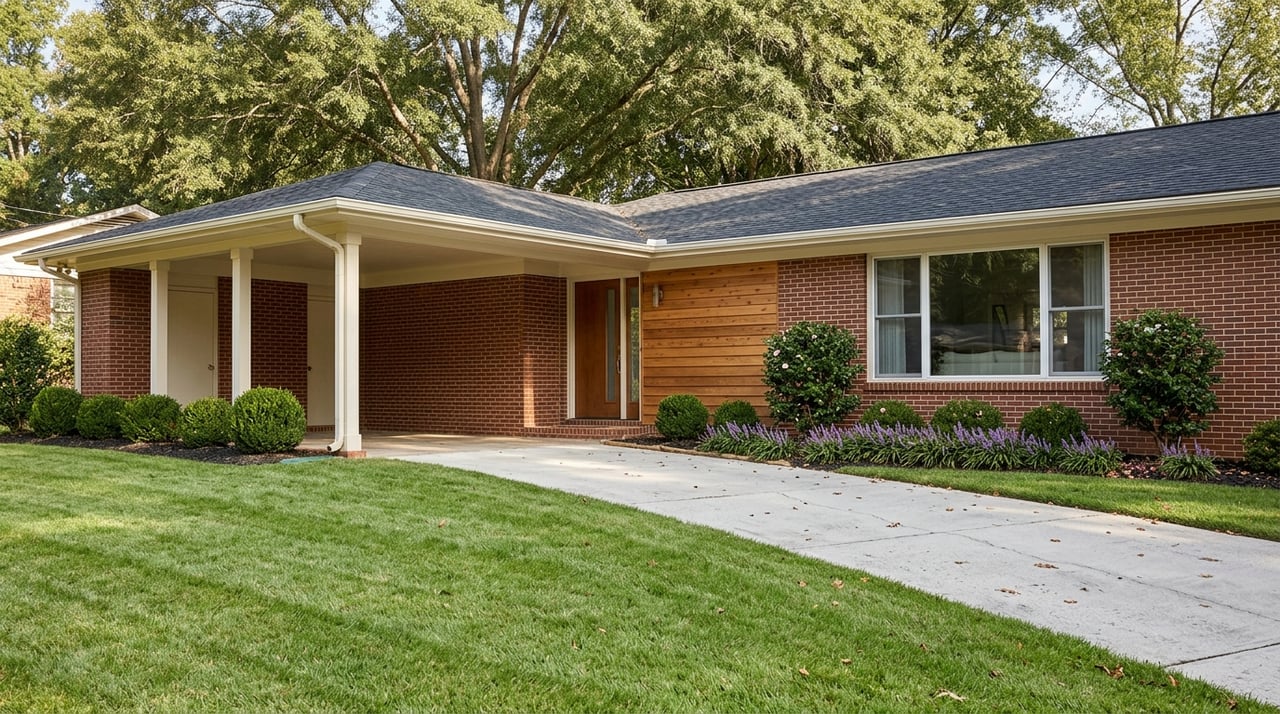
State documentation identifies 1950s and 1960s Ranch, Split-Level, and Minimal Traditional homes there. Ranch homes are usually one story with low-pitched roofs, wide eaves, picture windows, and a more open, casual layout. Split-level homes keep the same horizontal feeling but separate interior living areas across different levels.
These houses often create the most suburban feel in the Near West End. If you prefer simpler lines, practical layouts, and a mid-century look, these homes can be a meaningful part of your search.
Expect Style Blends, Not Perfect Labels
One of the biggest misconceptions about Richmond architecture is that every home fits neatly into one category. In reality, many Near West End homes blend features from more than one style.
State style guides note that Colonial Revival often overlaps with Dutch Revival, Tudor Revival, Cape Cod, Minimal Traditional, Ranch, and Split-Level influences. That is why it often makes more sense to describe a home by its dominant look first, then note the details that make it unique.
For buyers, this is helpful because it keeps you focused on how a home actually lives and presents, not just the label attached to it. For sellers, it can also lead to more accurate and appealing marketing.
What Styles Can Suggest About Lots
Architecture in the Near West End often gives you clues about lot size, yard layout, and how the house relates to the street. While every property is different, the broader development pattern matters.
Compact Urban Blocks
In townhouse-heavy areas, lots are typically narrower and the streetscape does a lot of the visual work. Monument Avenue required a 20-foot setback in its historic development pattern, and preservation records note that many lots there do not allow for especially large gardens.
West of the Boulevard also leans toward attached brick homes with consistent setbacks and front porches. The result is a sidewalk-focused, tree-shaded street edge rather than broad side yards or deep lawns.
Larger Suburban Lots
In Windsor Farms and Westhampton, detached revival-style homes are more often tied to deeper and more private lots. Three Chopt Road documentation describes wooded lots, formal or picturesque gardens, and long driveways that can feel more secluded.
City materials also identify Windsor Farms as one of Richmond’s first suburbs and note homes there over 3,000 square feet. If you want a house that sits farther back from the street, these parts of the Near West End usually fit that vision better.
Postwar Site Patterns
Mid-century sections can feel different in how they use the lot. In Carillon, some 1950s blocks were subdivided later and may lack sidewalks or alleyways, which changes how the streetscape reads.
Combined with ranch and split-level floor plans, that can create a more driveway-centered and less formal front-yard pattern. For some buyers, that feels practical and relaxed. For others, the older sidewalk-based blocks may feel more connected.
Why This Matters When Buying
If you are shopping in the Near West End, the architecture can tell you a lot before you even step inside. A Colonial Revival may suggest a more formal facade and traditional layout, while a bungalow may offer a cozier footprint and stronger porch presence.
A Tudor may stand out for character and roofline, while a ranch or split-level may appeal if you want a more casual mid-century feel. Knowing these patterns can help you narrow your search based on how you want a home to look, feel, and sit on its lot.
It can also keep expectations realistic. Two homes with similar square footage may feel very different depending on their era, setback, and street pattern.
Why This Matters When Selling
If you are preparing to sell, your home’s style is part of its story. Buyers often respond first to visual cues they can understand quickly, like symmetry, porch appeal, rooflines, brickwork, and how the home sits on the lot.
That means the best marketing usually highlights the dominant architectural language clearly. Instead of overcomplicating the description, it helps to show buyers what makes your home recognizable and appealing within the Near West End context.
This is also where local neighborhood knowledge matters. A home in Carillon may need to be framed differently than one in Windsor Farms or West of the Boulevard, even if both share some overlapping style details.
Check Historic or Design Rules First
Before planning major exterior changes, it is smart to verify whether your property falls within an area with design review. In some parts of the Near West End, exterior changes are reviewed by Richmond’s Commission of Architectural Review.
City planning materials also identify West of the Boulevard as Richmond’s only Design Overlay District. If you own a home there or are considering buying one, it is worth confirming district status early in the process.
The Big Picture on Near West End Style
The Near West End works best as a layered architectural story, not a single-style snapshot. You will find formal brick Colonials, porch-centered cottages, dramatic Tudors, and practical mid-century homes, often within the same broader area.
That variety is part of what gives the Near West End its lasting appeal. Whether you are buying your next home or preparing to sell, understanding the area’s architecture can help you see not just what a house is, but how it fits into the neighborhood around it.
If you want help understanding how a specific Near West End home fits the market, or how to position your own home for sale, the team at Simpson Realty Group is here to help with local guidance and a responsive, full-service approach.
FAQs
What architectural style is most common in Richmond’s Near West End?
- Colonial Revival is one of the clearest anchor styles in the Near West End, especially in places like Windsor Farms and along Monument Avenue.
What does a Tudor Revival home look like in the Near West End?
- Tudor Revival homes in the Near West End often feature steeply pitched roofs, tall narrow windows, prominent chimneys, mixed masonry, and decorative half-timbering.
Are homes in Richmond’s Near West End all one style?
- No. The Near West End is a visually mixed area with Colonial Revival, Georgian Revival, Tudor Revival, cottages, bungalows, Queen Anne homes, Ranch homes, Split-Levels, and other blended styles.
What parts of the Near West End have larger lots?
- Detached revival-style homes in areas like Windsor Farms and Westhampton are more often associated with deeper, more private lots and longer driveways.
Do postwar homes exist in Richmond’s Near West End?
- Yes. Later sections of Carillon include 1950s and 1960s Ranch, Split-Level, and Minimal Traditional homes that add a more suburban, mid-century layer to the area.
Are exterior home changes regulated in parts of the Near West End?
- Yes. Some properties may fall within areas reviewed by Richmond’s Commission of Architectural Review, and West of the Boulevard is identified by the city as a Design Overlay District.
Why do style labels in Richmond sometimes overlap?
- Many Richmond homes blend features from multiple styles, so labels are often best used as a guide to the home’s dominant look rather than as a strict category.